

MIT Executive Program in General Management [In-Depth Review][2026]

In an era where global business is increasingly defined by innovation, digital disruption, and cross-functional complexity, senior leaders need more than traditional management expertise—they need the ability to think like entrepreneurs, leverage emerging technologies, and lead with agility across diverse markets. The MIT Executive Program in General Management (EPGM) is designed precisely with this transformation in mind.
Offered by the MIT Sloan School of Management, this seven-month multimodular program empowers mid- to senior-level executives with a forward-looking leadership toolkit. With a unique blend of in-person immersion at the MIT campus and asynchronous online learning, the program delivers strategic depth, innovation frameworks, and technology-driven insights that reflect MIT’s legacy of shaping world-changing leaders.
But in today’s crowded executive education landscape, how can you be sure this program is the right investment for your leadership journey?
That’s where DigitalDefynd steps in.
As one of the most trusted platforms for evaluating and comparing executive learning opportunities, DigitalDefynd provides in-depth editorial reviews to help you make well-informed decisions. Our course reviews are built on verified institutional content, participant experiences, and detailed research—so you can understand not just what a program claims to offer, but what it actually delivers.
In this comprehensive review, we dive deep into the MIT Executive Program in General Management. We’ll explore every facet of the program, including its curriculum structure, faculty expertise, networking opportunities, certification value, participant profile, and competitive positioning. Whether you’re a functional head aiming to move into general management, a business leader preparing for C-suite responsibilities, or an entrepreneur scaling your enterprise, this review will help you determine if EPGM aligns with your leadership goals.
From system dynamics and AI-driven strategies to leadership development and global networking, this program reflects the rigor, innovation, and real-world relevance that MIT is known for. If you’re seeking more than a credential—and are ready for a leadership experience that transforms how you think, act, and lead—read on.
Let’s begin.
| Program at a Glance | |
| Program Name | Executive Program in General Management |
| Duration | 7 Months |
| Mode | Online and In Person |
| Program Fee | US$40,500 |
| Application Fee | US$200 |
| Faculty |
David Robertson, Faculty Director; Senior Lecturer at the MIT Sloan School of Management
|
|
Charles Fine, Chrysler Leaders for Global Operations Professor of Management
|
|
|
Stephanie Woerner, Principal Research Scientist and Executive Director, Center for Information System Research
|
|
|
Jake Cohen, Senior Associate Dean for Undergraduate and Master’s Programs
|
|
|
Jared Curhan, Associate Professor of Organization Studies
|
|
|
John Van Maanen, Erwin H. Schell Professor of Management and Professor of Organization Studies
|
|
|
Loredana Padurean, Associate Dean and Faculty Director for Action Learning at Asia School of Business
|
|
|
Michael Schrage, Research Fellow, MIT Center for Digital Business
|
|
|
Pierre Azoulay, International Programs Professor of Management
|
|
|
William Aulet, Professor of Practice, Technological Innovation, Entrepreneurship, and Strategic Management
|
|
| Certificate Program | Yes |
| DigitalDefynd Rating | 9 out of 10 |
| Sign Up Info | Sign up Here |
What to Expect in This Review
Here’s a full index of the review for easy navigation:
1. Institution Overview
Learn about the Massachusetts Institute of Technology (MIT), its longstanding legacy of innovation, and how the MIT Sloan School of Management fosters interdisciplinary leadership with a focus on real-world impact.
2. Program Snapshot
A concise look at the Executive Program in General Management’s structure—including its hybrid format, international focus, in-person and online components, fees, and who it’s designed for.
3. Curriculum Deep Dive
3.1 Core Modules
Explore the program’s curriculum, structured around four major themes: Strategy and Innovation, Digital Transformation and AI, Management and Leadership, and Technology and Value Chain Management.
3.2 Action Learning Project
Get insights into the seven-month, real-world Action Learning Project where participants tackle live business problems, culminating in a final presentation to a panel including MIT alumni and entrepreneurs.
3.3 Affiliate Alumni Benefits
Discover the unique alumni privileges granted to program graduates, including lifelong networking opportunities, MIT Sloan event access, and ongoing learning resources.
4. Learning Experience
Understand the multimodal learning structure, the blend of in-person and asynchronous online learning, and the immersive classroom dynamics at MIT Sloan.
5. Faculty and Thought Leadership
Meet the world-class MIT Sloan faculty and guest lecturers who bring research, consulting, and innovation experience into the classroom.
6. Certification and Alumni Access
Review the certifications awarded upon completion, including the prestigious Advanced Certificate for Executives (ACE), and what it means for your professional journey.
7. Application and Fees
Breakdown of the application process, eligibility requirements, and detailed fee structure, including what’s covered and what’s not.
8. Participant Profile
Explore the diverse backgrounds of past participants, including their geographies, industries, work experience, and functional roles.
9. Executive Peer Group and Networking
Examine how the program fosters global peer interaction, collaboration, and community-building both online and on the MIT campus.
10. Pros & Cons
A balanced evaluation of the strengths and potential limitations of the MIT Executive Program in General Management to help assess its fit for your goals.
11. Competitive Positioning
Compare the MIT Sloan program with other top-tier executive education offerings in terms of curriculum depth, innovation focus, alumni benefits, and global relevance.
12. Conclusion
Final reflections on who will benefit the most from this program and how it can influence long-term career impact in a tech-driven global economy.
1. Institution Overview
Founded in 1861, the Massachusetts Institute of Technology (MIT) stands as a global beacon of innovation, discovery, and academic excellence. With a mission to advance knowledge and educate students in science, technology, and related fields that best serve the world in the 21st century, MIT has consistently ranked among the top universities worldwide. According to the QS World University Rankings 2025–26, MIT is positioned as the No. 1 university globally for the 14th consecutive year and leads in 11 out of 48 subject areas. This enduring recognition reflects the institution’s commitment to academic rigor, research excellence, and societal impact.
MIT’s identity is rooted in a unique culture that merges curiosity, experimentation, and practical problem-solving. Its community is described as “fun and quirky, elite but not elitist, inventive and artistic, obsessed with numbers, and welcoming to talent from all backgrounds”. This balance of intellectual intensity and cultural openness creates a vibrant environment that fosters groundbreaking innovation and cross-disciplinary collaboration.
At the heart of MIT’s business and leadership education is the MIT Sloan School of Management. Sloan distinguishes itself from traditional business schools by fusing cutting-edge research with global application. It approaches management education not as a static discipline, but as a dynamic intersection of business, technology, and real-world problem solving. Sloan’s initiatives span a wide spectrum—from exploring the future of work and launching companies that drive local economies, to transforming global healthcare systems and addressing climate change challenges.
Sloan’s global impact is measurable. With 147,000 alumni in over 160 countries, including 105 Nobel laureates across nearly all categories and 32,000 alumni-founded companies, the school’s ecosystem is vibrant and far-reaching. These companies generate roughly US$2 trillion in annual revenue and have created over 4.6 million jobs worldwide. Additionally, Cambridge, the home of MIT, houses more than 100 venture capital firms, offering a fertile ground for entrepreneurship and innovation.
In short, MIT and its Sloan School of Management are not only training grounds for future leaders—they are engines of global economic and technological transformation. The Executive Program in General Management is an extension of this legacy, offering participants not only academic learning but access to one of the most innovative ecosystems in the world. It is this confluence of excellence, impact, and access that sets the foundation for the program’s unique value.
2. Program Snapshot

The Executive Program in General Management (EPGM) from MIT Sloan is a seven-month, multimodular journey crafted for mid-career leaders who aspire to elevate their strategic, operational, and innovation capabilities. Designed for senior professionals from emerging markets, the program blends academic excellence with real-world application and peer collaboration. With a format that includes three in-person terms and three online terms, the program is structured to fit into the lives of busy executives without compromising on depth or rigor.
Participants engage in over 200 hours of learning, featuring 20+ globally renowned MIT Sloan faculty members, leading researchers, and guest speakers. The hybrid design leverages the best of both worlds: immersive, face-to-face sessions on the MIT campus in Cambridge, Massachusetts, and asynchronous, self-paced online modules facilitated through MIT’s digital learning partner, Emeritus.
The program’s curriculum is anchored in four thematic pillars: Strategy and Innovation, Digital Transformation and AI, Management and Leadership, and Technology and Value Chain Management. These areas address the multifaceted demands placed on today’s business leaders and help participants build a forward-thinking leadership mindset that can be applied across industries and geographies.
A key feature of the program is the Action Learning Project—an integrated, hands-on component that spans the entire seven months. Participants work in teams to tackle real business challenges, applying their learning to ideate, test, and present solutions to a panel of MIT faculty, alumni, and entrepreneurs. This practical orientation ensures that the curriculum translates into actionable skills and insights.
Another standout offering is access to affiliate alumni benefits. Graduates of the program gain lifetime access to the MIT Sloan alumni portal, networking opportunities, event invitations, and even a lifelong MIT Sloan email forwarding address. These benefits continue to add value long after the program concludes, supporting ongoing career growth and thought leadership engagement.
In essence, the MIT Executive Program in General Management offers a holistic leadership development experience. It is ideal for professionals with a minimum of 10 years of experience and a desire to transition into more strategic roles or pursue entrepreneurial ventures. The program fee is US$40,500, with an application fee of US$200. Given its modular structure, prestigious faculty, and global peer group, EPGM delivers an impactful and flexible route for executives ready to lead in a rapidly evolving global economy.
Related: MIT vs Columbia University
3. Curriculum Deep Dive
3.1 Core Modules

The Executive Program in General Management (EPGM) at MIT Sloan is centered around a comprehensive and thoughtfully structured curriculum designed to build strategic leadership capability through deep exposure to cutting-edge business disciplines. At its core, the program integrates four key pillars—Strategy and Innovation, Digital Transformation and Artificial Intelligence (AI), Management and Leadership, and Technology and Value Chain Management—each offering a blend of theoretical frameworks, applied tools, and real-world relevance. This well-balanced academic structure ensures that participants acquire holistic business acumen while enhancing their problem-solving, innovation, and decision-making capabilities.
Strategy and Innovation
This pillar equips participants with frameworks to drive competitive advantage in an increasingly volatile and global business environment. It covers a wide range of topics aimed at understanding the strategic forces shaping industries and how leaders can innovate to stay ahead. Courses under this pillar include:
– Competitive Strategy, which teaches how to assess market dynamics and formulate business strategies that yield sustainable differentiation.
– Entrepreneurial Strategy, which focuses on applying startup agility and risk-taking to enterprise-level innovation.
– Innovation Dynamics and Models, where participants explore how disruptive innovation occurs, and how to manage the lifecycle of innovation from ideation to execution.
– Marketing Strategies, offering insight into positioning, segmentation, and customer-centric innovation.
Through these modules, executives gain a robust strategic mindset that blends forward-thinking vision with actionable insights.
Digital Transformation and Artificial Intelligence (AI)
This domain explores how digital technologies are fundamentally reshaping industries, customer behavior, and organizational capabilities. Participants examine key concepts of platform economies, AI adoption, and digital operations through topics such as:
– AI for Business Transformation, which dives into how AI technologies can unlock efficiencies, insights, and new business models.
– Digital Business Models, exploring how digital ecosystems and platforms create new avenues for value creation.
– Platform Strategy, a course that unpacks the logic of digital marketplaces and the strategic levers for scaling them.
– Digital Operations, which looks at automation, integration, and operational excellence in digitally mature organizations.
By the end of this pillar, participants develop a nuanced understanding of how to lead digital transformation, implement scalable technologies, and stay ahead in the data economy.
Management and Leadership
This section is dedicated to the human and organizational dimensions of leadership. It addresses how executives can influence, inspire, and lead with purpose while navigating the complexities of organizational behavior and global teams. The focus is on building self-awareness, influence, and cross-functional collaboration, covered through courses such as:
– Change Management, offering methodologies for leading organizational transitions effectively.
– Negotiation and Influence, focusing on how to build alliances, gain consensus, and resolve conflict.
– Organizational Networks and Power, which uncovers the informal structures that influence behavior and decision-making.
– The Coaching Approach to Leadership, designed to instill a mentoring and empowerment-based leadership style.
Participants finish this pillar with a refined interpersonal leadership skillset, ready to engage teams, manage transformation, and foster a culture of innovation and trust.
Technology and Value Chain Management
This final pillar addresses the operational and technological capabilities required to deliver value at scale. It dives into the systems, processes, and analytics that ensure organizational resilience and performance, including:
– Valuation and Financial Analysis, helping leaders interpret financial metrics and drive resource allocation decisions.
– Operations for Entrepreneurs, which applies lean startup principles and agile operations to mature businesses.
– Value Chain Dynamics, focusing on how to streamline supply chains and align them with strategic priorities.
– System Dynamics, which equips participants with tools to model complex organizational systems and predict outcomes.
– Service Quality and Innovation, which explores how operational excellence and customer experience are interlinked.
The courses within this pillar are particularly relevant for executives overseeing multi-geography operations, cross-functional departments, or growth-stage companies where operational agility is crucial.
Integrated Learning Model
What distinguishes MIT Sloan’s core modules is not only their breadth but their integration across domains. Each theme is reinforced through case studies, peer interactions, real-world application via the Action Learning Project, and faculty-led discussions. Participants are encouraged to draw connections between strategy, technology, and people—an approach reflective of the complex decisions leaders must make in fast-moving environments.
Additionally, the presence of more than 20 MIT Sloan faculty and guest experts throughout these modules ensures participants learn from multiple perspectives—spanning innovation, entrepreneurship, digital transformation, systems thinking, and organizational behavior. These interactions add both depth and diversity to the learning experience.
Altogether, the core modules create a transformative academic journey that helps leaders develop the skills and mindset to anticipate change, lead cross-functional teams, and execute on bold, innovative visions. Whether transitioning into senior leadership or driving a new growth phase, participants emerge with the confidence, tools, and frameworks necessary to succeed in today’s complex global business landscape.
| Program at a Glance | |
| Program Name | Executive Program in General Management |
| Duration | 7 Months |
| Mode | Online and In Person |
| Program Fee | US$40,500 |
| Application Fee | US$200 |
| Certificate Program | Yes |
| DigitalDefynd Rating | 9 out of 10 |
| Sign Up Info | Sign up Here |
3.2 Action Learning Project
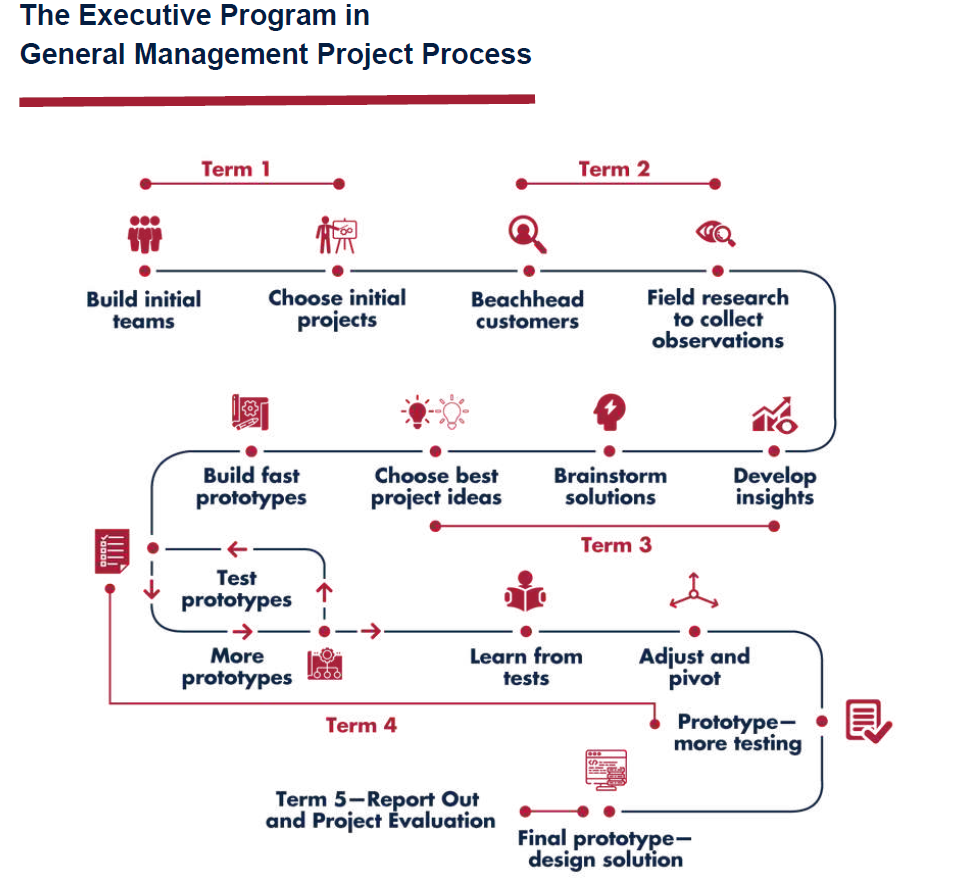
A defining component of the MIT Executive Program in General Management is the Action Learning Project (ALP)—a rigorous, hands-on initiative that extends across the program’s full seven-month duration. More than a traditional academic assignment, the ALP serves as a critical bridge between classroom learning and real-world application. It is designed to challenge participants to engage deeply with live business issues, explore unfamiliar operating environments, and apply newly acquired strategic, leadership, and innovation frameworks to generate tangible impact.
At its core, the Action Learning Project embodies MIT Sloan’s philosophy of learning by doing. Participants are not merely passive recipients of theoretical knowledge—they are active contributors to problem-solving exercises that simulate or reflect real business environments. Whether the challenge involves market entry strategies, digital transformation, operational optimization, or innovation roadmaps, the ALP is meant to stretch participants beyond their comfort zones and expose them to a wider spectrum of business complexities.
Throughout the project, participants work individually or in small teams to address a pressing strategic or operational issue relevant to their organizations or industries. The scope of the project is intentionally broad to allow customization based on the participant’s role, domain expertise, and industry challenges. It could involve evaluating a new business model, improving value chain efficiency, testing a digital strategy, or designing a go-to-market plan for a new product or service.
To ensure meaningful learning and outcomes, participants follow a structured process that includes the following key stages:
a. Problem Definition and Contextual Framing– In the initial weeks, participants identify a real-world problem or opportunity area and establish a contextual understanding of the business landscape, including key stakeholders, competitive pressures, and organizational objectives.
b. Solution Design and Strategy Formulation– Using insights from the core curriculum, participants develop strategic hypotheses and action plans. This phase leverages concepts from modules on innovation, AI, value chain dynamics, leadership, and organizational strategy.
c. Testing and Feedback Iterations– Participants validate their ideas through internal stakeholder engagement, simulations, and mentor or faculty feedback. This iterative approach ensures that the solutions are both innovative and practically viable.
d. Final Presentation– The project culminates in a final presentation to a distinguished panel comprising MIT alumni, entrepreneurs-in-residence, faculty members, and angel investors. This panel provides critical feedback, challenges assumptions, and offers recommendations, making the ALP a deeply enriching experience.
The ALP is more than a learning exercise—it’s a career catalyst. Participants have used this project to initiate change within their companies, demonstrate strategic leadership to boards and executive teams, or even lay the groundwork for new ventures. For many, the ALP becomes a showcase of applied executive capability and a tangible outcome that can be immediately leveraged for professional advancement.
Ultimately, the Action Learning Project is a cornerstone of the MIT EPGM experience. It ensures that participants don’t just absorb concepts—they internalize and apply them in ways that deliver measurable impact. It reinforces the program’s value proposition: to transform seasoned professionals into globally minded, innovation-driven leaders who can confidently navigate uncertainty and drive meaningful change.
3.3 Affiliate Alumni Benefits
One of the most compelling aspects of completing the MIT Executive Program in General Management is gaining access to the MIT Sloan Affiliate Alumni Network, a prestigious and lifelong benefit that extends far beyond the classroom. Unlike many executive education programs that conclude with a certificate alone, MIT Sloan enhances the post-program experience by granting graduates ongoing access to an elite global community of innovators, leaders, and change-makers.
Upon successful completion of the program, participants become eligible for a rich suite of affiliate alumni privileges that offer both professional and personal value. These benefits are designed to foster continued learning, global networking, and career advancement—making the alumni experience an integral part of the overall return on investment.
Access to the MIT Sloan Alumni Portal
Graduates receive access to the exclusive MIT Sloan alumni portal, a powerful digital gateway that connects members with thousands of professionals around the world. Through this portal, alumni can update their profiles, explore a directory of peers, and engage in industry-specific or regional communities.
Participants can also create a profile on the Sloan People Database (SPD)—a centralized platform that enables alumni to search for, connect with, and collaborate across professional domains. This network spans 160+ countries, offering unparalleled access to decision-makers, entrepreneurs, and domain experts across industries.
Email Forwarding for Life (EFL)
As part of the affiliation, graduates are provided with a lifelong email forwarding address (@sloan.mit.edu), reinforcing their connection with MIT Sloan and allowing them to signal their executive credential in professional communications.
Exclusive Event Invitations
Affiliate alumni are invited to MIT Sloan events, which are held both virtually and in-person across the globe. These include conferences, speaker series, thought leadership forums, and networking receptions. Participants also gain visibility into the MIT Sloan events calendar, making it easy to stay engaged with the latest academic and industry developments.
Access to Clubs and Regional Networks
Alumni are eligible to attend events organized by MIT Sloan Clubs around the world. These regional clubs host meetups, panel discussions, and social gatherings that offer direct access to the local MIT community. While club membership rules vary, many allow affiliate alumni to participate in key events and discussions—opening doors to new professional relationships and local business insights.
Publications and Continuing Learning
Graduates receive electronic copies of the MIT Sloan alumni magazine, published biannually in the fall and spring, as well as the monthly alumni e-newsletter, which features faculty insights, alumni stories, and updates on Sloan’s global impact.
Additionally, affiliate alumni enjoy a 20% discount on standard open enrollment executive education programs offered by MIT Sloan, with some exceptions. This benefit makes continued upskilling more accessible and supports the ethos of lifelong learning—a hallmark of the MIT community.
Together, these benefits create a robust alumni ecosystem that enhances the value of the Executive Program in General Management well beyond graduation. Whether it’s through networking, professional development, or continued access to MIT thought leadership, affiliate alumni status reinforces participants’ connection to one of the world’s most respected innovation and leadership institutions.
For executives seeking not just education, but enduring association with a top-tier global brand, these affiliate alumni benefits provide both credibility and community—empowering graduates to thrive as connected leaders in a rapidly evolving world.
Related: MIT vs Oxford University
4. Learning Experience
The MIT Executive Program in General Management (EPGM) delivers a transformative learning experience that blends academic excellence with practical, real-world application—hallmarks of the MIT Sloan approach. Its distinctive multimodal structure, combining in-person and online formats, is designed to maximize flexibility without compromising on depth, engagement, or experiential learning. From dynamic classroom sessions to asynchronous digital coursework, participants are immersed in a highly interactive, collaborative, and intellectually stimulating environment throughout the program’s seven-month duration.
A Blended, Multimodal Format
The program consists of three in-person modules held on the MIT Sloan campus in Cambridge, Massachusetts, interspersed with three online modules delivered asynchronously. This hybrid format ensures that senior executives from around the world can integrate the program into their demanding schedules while still benefiting from face-to-face engagement with faculty and peers.
Each in-person module offers a deep dive into specific aspects of the curriculum and includes live classroom instruction, panel discussions, group exercises, and networking sessions. These immersive residencies allow participants to absorb MIT’s academic rigor in a collaborative setting and to experience the vibrant Cambridge innovation ecosystem firsthand—including exposure to MIT’s renowned research labs and industry speakers.
The online modules, delivered between the in-person sessions, are facilitated through MIT’s learning partner Emeritus and consist of interactive video lectures, case studies, assignments, and discussion forums. The asynchronous format allows participants to engage with content on their own time while maintaining consistent momentum and engagement with faculty and peers.
200+ Hours of Learning with World-Renowned Faculty
Over the course of the program, participants engage in more than 200 hours of instruction, delivered by over 20 faculty members from MIT Sloan. These include leading academics, industry experts, and innovation practitioners who bring real-world relevance to every module. Faculty leverage MIT’s pioneering research in areas such as AI, system dynamics, platform strategy, and change management to address complex leadership challenges faced by today’s executives.
Learning sessions are enriched with guest lectures from company leaders, researchers, and MIT-affiliated entrepreneurs, providing participants with exposure to a wide array of perspectives and strategic contexts. These sessions often spark lively discussions around emerging technologies, business model innovation, and global economic trends.
Real-World Application through the Action Learning Project
The EPGM emphasizes practical learning through its integrated Action Learning Project, which runs parallel to the academic modules. Participants apply classroom theories to real business problems from their own organizations or industries, testing solutions in a real-time environment. This hands-on project ensures that insights from the program are not just theoretical but immediately actionable, allowing participants to demonstrate value within their organizations while still enrolled in the program.
Peer Learning and Global Cohort Dynamics
A unique strength of the program lies in its globally diverse participant cohort. Executives come from more than 20 countries and represent a range of industries, including finance, technology, healthcare, consumer goods, and manufacturing. With a minimum requirement of 10 years of experience, the cohort includes leaders from startups, medium enterprises, and large multinational corporations.
This diversity fuels rich peer-to-peer learning through structured group work, collaborative problem-solving, and cross-industry discussions. The program fosters a collegial environment where participants can exchange ideas, challenge each other’s perspectives, and build a trusted network of senior professionals. These relationships often extend beyond the program, creating long-term value through mentorship, partnerships, and continued dialogue.
Immersion in the MIT Ecosystem
Attending in-person sessions at MIT Sloan offers more than academic content—it provides direct exposure to one of the world’s most influential innovation hubs. From interacting with faculty involved in breakthrough research to engaging with Boston-area entrepreneurs and MIT labs, participants gain firsthand insight into the tools and mindsets driving global business transformation. Panel discussions with industry experts and MIT researchers further ground theoretical frameworks in real-world innovation practice.
In sum, the learning experience in the MIT Executive Program in General Management is rigorous, interactive, and transformational. It reflects MIT Sloan’s commitment to developing forward-thinking leaders who can tackle uncertainty, drive innovation, and lead global enterprises with confidence. Participants leave the program not only with enhanced knowledge and leadership skills but also with a deeper understanding of how to implement change, build resilient organizations, and navigate the complexities of a rapidly evolving business world.
5. Faculty and Thought Leadership


The MIT Executive Program in General Management (EPGM) is distinguished by the exceptional caliber of its faculty—world-renowned thought leaders, researchers, and educators at the forefront of business innovation and technology. These experts represent the intellectual backbone of the program and bring a rare blend of academic rigor and practical experience that makes the learning journey both deeply insightful and highly applicable. Their teaching is not confined to theory but infused with real-world insights, case studies, and tools drawn from MIT’s cutting-edge research ecosystem.
A Multidisciplinary Faculty Lineup
The EPGM curriculum is delivered by over 20 faculty members from the MIT Sloan School of Management and affiliated institutions, each selected to provide domain-specific depth and global relevance. These instructors are not just academics—they are active advisors to leading corporations, entrepreneurs, policy makers, and startups around the world. Their involvement ensures that classroom content reflects the evolving realities of global business leadership, technological disruption, and organizational change.
At the forefront of the faculty is David Robertson, Senior Lecturer in Operations Management at MIT Sloan. With a PhD and MBA from MIT and extensive academic and industry experience—including his tenure as the LEGO Professor of Innovation and Technology Management at IMD—Robertson offers unique insights into product development, innovation strategy, and business model transformation. He is also the author of the critically acclaimed book Brick by Brick, which explores LEGO’s turnaround through innovation, and his work has been featured in Wired, Forbes, Harvard Business Review, and MIT Sloan Management Review.
In addition to Robertson, the faculty roster includes:
– Stephanie Woerner, Principal Research Scientist and Executive Director at MIT’s Center for Information Systems Research, known for her work on digital transformation and enterprise architecture.
– Jake Cohen, Senior Lecturer in Accounting, Ethics, and Law, offering deep insights into corporate governance and ethical leadership.
– Erin Scott, Senior Lecturer in Technological Innovation, Entrepreneurship, and Strategic Management, who bridges the gap between startup thinking and corporate innovation.
– Pierre Azoulay, Professor of Management, recognized for his research in innovation ecosystems and R&D productivity.
– John Van Maanen, Erwin H. Schell Professor of Management, known for his contributions to organizational behavior and leadership studies.
– Charles Fine, Chrysler Leaders for Global Operations Professor, specializing in value chain dynamics and supply chain strategy.
– Michael Schrage, Research Fellow at the Center for Digital Business, who explores how organizations can innovate through experimentation and design thinking.
– Jared Curhan, Gordon Kaufman Professor of Management, with expertise in negotiation and influence strategies.
Several faculty members also hold leadership roles in MIT’s labs and research centers, including digital innovation, entrepreneurship, system dynamics, and artificial intelligence. Their direct involvement in applied research ensures that participants are exposed to the most current and impactful trends in technology, business strategy, and leadership science.
Dynamic, Practitioner-Led Teaching Style
MIT Sloan’s faculty adopts a highly interactive teaching approach, incorporating real-world case studies, live discussions, group challenges, and simulation-based exercises. Many sessions are structured as dialogues rather than lectures, encouraging participants to bring their own experiences and perspectives into the conversation. This format creates a rich learning environment that leverages the collective intelligence of the faculty and cohort alike.
Moreover, faculty often serve as mentors and strategic advisors throughout the program, especially during the Action Learning Project phase. Their guidance helps participants translate theoretical frameworks into actionable strategies that can be applied directly to their organizational challenges.
Global Impact and Influence
What sets MIT Sloan faculty apart is their global influence across industry and academia. They have advised Fortune 500 companies, national governments, and international NGOs. Their work is published in top-tier journals and business publications, and they are frequent keynote speakers at global forums on digital transformation, sustainability, innovation, and organizational leadership.
In essence, the faculty behind the MIT Executive Program in General Management are more than instructors—they are strategic partners in leadership development. Their presence elevates the program from a traditional academic experience to a transformational journey, equipping participants with not only the tools but also the mindsets required to lead in a complex, technology-driven, and opportunity-rich world. With MIT’s distinguished thought leadership at the helm, EPGM participants gain access to a rare intellectual ecosystem that continues to inform and inspire long after the program ends.
Related: Famous Alumni Members of MIT
6. Certification and Alumni Access
Upon successful completion of the MIT Executive Program in General Management (EPGM), participants are awarded not one but two prestigious certifications—a strong testament to their academic achievement, leadership development, and professional growth. These credentials not only affirm the learner’s completion of a rigorous executive education program but also unlock access to MIT Sloan’s globally respected network and lifelong learning ecosystem.
Dual Recognition: Certificate of Completion + Advanced Certificate for Executives (ACE)
Graduates of the EPGM receive:
a. Certificate of Completion for the Executive Program in General Management, issued by the MIT Sloan School of Management. This official recognition signifies that the participant has completed a comprehensive seven-month leadership curriculum that spans innovation, strategy, digital transformation, and organizational management.
b. Advanced Certificate for Executives (ACE)in Management, Innovation, and Technology—a prestigious MIT Sloan credential that highlights the depth and focus of the learning journey. This certificate reflects the participant’s commitment to mastering integrated business disciplines with a future-focused, tech-savvy mindset.
These credentials serve as powerful validation of the participant’s skills and are often showcased on executive resumes, LinkedIn profiles, corporate bios, and board nomination documents. More than symbolic achievements, they offer tangible value in advancing career trajectories, earning stakeholder trust, and establishing credibility in strategic decision-making roles.
Access to the MIT Sloan Affiliate Alumni Network
One of the most enduring benefits of completing the EPGM is gaining entry into the MIT Sloan Affiliate Alumni Network, a gateway to one of the world’s most prestigious communities of innovators, leaders, and entrepreneurs. While this affiliate status does not equate to full MIT degree-alumni rights, it comes with an impressive suite of resources and privileges that offer both professional utility and long-term value.
Key alumni benefits include:
a. Access to the MIT Sloan Alumni Portal, where participants can create and manage profiles, search for and connect with other alumni, and stay informed about events, publications, and opportunities.
b. Inclusion in the Sloan People Database (SPD)—a searchable directory of thousands of MIT Sloan affiliates, making it easier to build relationships across industries, functions, and geographies.
c. A lifelong MIT Sloan email forwarding address(EFL), which enables graduates to maintain professional ties with the institution and reflect their affiliation in external communications.
Lifelong Learning and Professional Development
Graduates also benefit from continuous engagement with MIT’s intellectual ecosystem. They receive:
a. Electronic copies of MIT Sloan’s alumni magazineand monthly e-newsletters, which feature faculty research, alumni achievements, and emerging global business trends.
b. Invitations to MIT Sloan events, including conferences, webinars, and speaker series hosted around the world.
c. Access to MIT Sloan Clubs, which offer networking events, professional development forums, and region-specific gatherings. While each club has its own membership guidelines, affiliate alumni are often welcomed at many events and informal meetups.
Furthermore, affiliate alumni are eligible for a 20% discount on future MIT Sloan Executive Education open enrollment programs, enabling continued upskilling across a variety of advanced topics in strategy, innovation, finance, and technology. This discount reinforces MIT Sloan’s commitment to lifelong learning and ensures that alumni can stay at the forefront of business transformation long after the EPGM ends.
In summary, the certification and alumni access offered through the MIT Executive Program in General Management provide lasting value that extends far beyond the seven-month classroom experience. With industry-recognized credentials and entry into a world-class network of business leaders, participants are empowered to accelerate their careers, expand their influence, and remain connected to MIT’s global innovation engine. Whether used to enhance boardroom credibility or open doors to new ventures, these post-program benefits are integral to the program’s long-term return on investment.
| Program at a Glance | |
| Program Name | Executive Program in General Management |
| Duration | 7 Months |
| Mode | Online and In Person |
| Program Fee | US$40,500 |
| Application Fee | US$200 |
| Certificate Program | Yes |
| DigitalDefynd Rating | 9 out of 10 |
| Sign Up Info | Sign up Here |
7. Application and Fees
Applying to the MIT Executive Program in General Management (EPGM) is the first step in joining an elite network of global executives and innovators committed to advancing leadership in the age of digital transformation and strategic disruption. The application process is designed to identify mid- to senior-level professionals who bring a wealth of industry experience, a passion for growth, and the potential to contribute meaningfully to the cohort learning experience.
Who Should Apply
The program is specifically tailored for mid-career to senior executives from emerging markets who are preparing to take on broader leadership responsibilities or considering transitions into strategic, cross-functional, or entrepreneurial roles. Ideal applicants typically hold positions in large organizations, medium-sized enterprises, or startups and have accumulated substantial work experience across business, functional, or technical roles.
While the program does not require academic prerequisites beyond a graduate degree, it emphasizes professional and leadership maturity. Applicants should possess:
– A minimum of 10 years of work experience in business, technical, or functional roles
– A graduate degree(preferred, but not mandatory)
– Fluency in written and spoken English
– International exposure, which is advantageous though not compulsory
Application Process
The admissions process is structured to ensure a strong cohort composition and alignment between participant goals and program outcomes. Applications are reviewed on a rolling basis, and interested professionals are encouraged to apply early, particularly if they need time to manage travel arrangements or obtain a visa for the in-person modules in the United States.
The steps to apply include:
– Online Application Form– Prospective participants must complete a detailed online application that includes personal information, educational background, work experience, and career objectives.
– Application Fee– A non-refundable application fee of US$200must be submitted along with the completed application.
– Admissions Review– The MIT Sloan and Emeritus admissions teams review applications. In some cases, candidates may be contacted for further discussion to assess mutual fit.
– Rolling Admissions & Multiple Rounds– While the program has multiple application rounds, applying early improves the chances of acceptance and provides ample time for visa processing where necessary.
Note: Since part of the curriculum is delivered in person at the MIT Sloan campus in Cambridge, Massachusetts, applicants needing travel visas should initiate the process as early as possible.
Program Fee
The total investment for the program is:
– Program Fee: US$40,500
– Application Fee: US$200(non-refundable)
This program fee includes:
– Tuition for all in-person and online modules
– Access to over 200 hours of learning led by 20+ MIT Sloan faculty and guest speakers
– Participation in the Action Learning Project
– Use of MIT Sloan learning platforms and tools
– Course materials and classroom resources
– Meals during on-campus modules (breakfasts, coffee breaks, and lunches)
– Access to MIT Sloan Affiliate Alumni benefits, including the alumni portal, events, and email forwarding address
– Issuance of two certifications: the Certificate of Completion and the Advanced Certificate for Executives (ACE)in Management, Innovation, and Technology
What’s Not Included:
– Travel, accommodation, visa expenses, and any incidental costs related to the in-person modules
– Costs associated with any extra MIT Sloan executive education programs outside the EPGM curriculum
– Evening meals and personal expenses during campus residencies
Payment and Funding
Many participants receive corporate sponsorship or reimbursement as part of their professional development plans. The admissions team offers support in framing the program’s strategic ROI to help participants justify funding requests to employers. It includes assistance with preparing business cases that outline how the program aligns with leadership development goals and organizational impact.
In summary, the application and fee structure of the MIT Executive Program in General Management reflects both the program’s premium academic quality and the transformational value it delivers. With a flexible application process, clear eligibility criteria, and a comprehensive fee that covers world-class instruction and networking, the program represents a high-return investment for leaders ready to scale their impact on a global stage.
8. Participant Profile
The MIT Executive Program in General Management (EPGM) is designed for seasoned professionals and mid- to senior-level executives from diverse functional areas, industries, and geographies—especially those operating in or coming from emerging markets. This diversity is not incidental; it is a key component of the learning experience, enriching classroom discussions, peer collaborations, and strategic insights through cross-sectoral and multicultural perspectives.
Ideal Candidate Background
The program seeks high-potential leaders who are ready to accelerate their careers, expand their strategic influence, and transition into more senior roles such as business unit heads, CXOs, or entrepreneurs. Most participants share the following characteristics:
– A minimum of 10 years of professional experiencein business, technical, or functional leadership roles
– Experience in managing teams, business units, or functional areas
– Aspirations to take on more complex, cross-functional, or global responsibilities
– Strong motivation to learn from MIT’s research-driven, innovation-focused curriculum
– An international outlook and comfort working across cultural contexts
– Fluency in spoken and written English, which is mandatory for program participation
While a graduate degree is preferred, it is not mandatory for admission. The admissions committee focuses more on leadership maturity, career trajectory, and the applicant’s potential contribution to the cohort learning environment.
Industry and Functional Diversity
Participants come from a wide spectrum of industries, with a strong representation across:
– Banking and Financial Services
– IT Products and Services
– Consulting
– Retail and Consumer Goods
– Telecommunications
– Healthcare
– Energy
– Logistics
– Real Estate
– Education
– Civil Construction
– Media and Electronics/Hardware
This multi-industry mix allows participants to learn not just from MIT Sloan faculty, but also from the real-world experience of their peers tackling similar challenges in different business environments.
In terms of job functions, participants hold roles across:
– General Management
– Technology Management
– Marketing and Sales
– Finance and Accounting
– Operations
– Consulting
– Others, including entrepreneurship and strategic planning
Years of Experience
The program typically attracts experienced professionals, with the majority falling into the following experience brackets:
– 26%with 11–15 years of experience
– 42%with 16–20 years of experience
– 28%with 20+ years of experience
– 4%with 6–10 years of experience (usually exceptional fast-track leaders)
This distribution ensures a mature, high-caliber cohort of professionals capable of meaningful peer learning, coaching-style dialogue, and collaborative project execution.
Geographic Reach
EPGM attracts participants from over 20 countries, particularly those located in rapidly evolving economic regions. These geographies include parts of Asia, the Middle East, Africa, Latin America, and Eastern Europe. This global cohort composition fosters a rich exchange of perspectives and insights on strategy, innovation, leadership, and market dynamics in both developed and emerging markets.
Leadership and Growth Orientation
Whether they come from startups, mid-sized enterprises, or large corporations, participants typically share a forward-looking mindset. They are eager to navigate complexity, embrace digital transformation, lead innovation, and shape the future of their organizations. Many are preparing for a transition—whether into general management, entrepreneurship, or a C-suite position—and are seeking both the skills and the network to succeed in their next chapter.
In summary, the participant profile of the MIT Executive Program in General Management reflects a dynamic, ambitious, and globally connected group of leaders. The cohort’s diversity—across roles, industries, and regions—ensures that learning goes well beyond the classroom. Through shared experience, peer collaboration, and a mutual commitment to strategic growth, participants become part of a high-impact community poised to lead in today’s complex global business landscape.
9. Executive Peer Group and Networking
One of the most valuable aspects of the MIT Executive Program in General Management (EPGM) lies not only in its curriculum or world-class faculty, but in the powerful peer network it fosters. Designed for high-performing, mid- to senior-level professionals from around the globe, the program offers a structured, deeply engaging peer group experience that enables participants to form enduring relationships, exchange cross-industry insights, and expand their leadership perspectives. Networking is not a peripheral component—it is an intentional and integral part of the learning journey.
A Globally Diverse Cohort
Participants come from more than 20 countries, spanning North America, Asia, the Middle East, Africa, and Latin America. This global representation creates a vibrant learning environment where executives are continually exposed to diverse cultural, strategic, and operational viewpoints. Whether through classroom dialogue, online forums, or project collaboration, this diversity enriches the experience and broadens each participant’s leadership lens.
From consulting and finance to healthcare, technology, consumer goods, and infrastructure, the program’s participants reflect a broad mix of industries and functions. This cross-sector composition encourages out-of-the-box thinking and enables leaders to explore how best practices and innovations in one industry can be adapted and applied to others.
Peer Learning as a Core Pillar
The peer group learning model at MIT Sloan is both structured and organic. Throughout the program, participants are grouped into smaller, curated cohorts designed for diversity of function, geography, and industry. These executive peer groups serve as forums for in-depth discussions, mutual feedback, and shared problem-solving.
Within these settings, participants:
– Discuss live business challenges in a confidential, trusted environment
– Gain peer coaching and constructive feedback on leadership approaches and decisions
– Exchange tools, strategies, and frameworks from their professional experiences
– Build empathy and understanding by hearing how challenges are approached in different cultural or market contexts
These interactions are not merely academic—they are deeply personal and professionally transformative. Executives often report that peer groups help them see blind spots, unlock new leadership styles, and spark strategic clarity in ways that solitary reflection cannot.
Collaborative Projects and Group Exercises
Throughout the program, especially during the Action Learning Project, peer groups collaborate to work on real-world problems, either in teams or as sounding boards for one another’s initiatives. These group interactions are facilitated during both in-person sessions and digital modules, ensuring continuity of engagement throughout the program’s seven-month span.
The diversity of thought and experience within these teams mimics the cross-functional, multicultural dynamics that senior executives face in global organizations, making the experience directly applicable to day-to-day leadership.
In-Person Networking on Campus
The program’s three in-person modules at MIT Sloan’s Cambridge campus further elevate the peer networking experience. During these immersive residencies, participants interact face-to-face with faculty, guest speakers, and fellow executives through:
– Panel discussions
– Group case debriefs
– Networking dinners
– Informal conversations and coffee breaks
– Visits to MIT research labs and innovation hubs
This face-to-face component allows participants to move beyond the digital format, strengthen personal relationships, and deepen trust within their peer groups. The intensity and energy of the on-campus experience often catalyze lifelong professional and personal bonds.
Post-Program Community
Beyond the program, participants gain access to MIT Sloan’s affiliate alumni network, which extends the community and keeps the networking alive. It includes access to Sloan alumni directories, regional club events, virtual forums, and newsletters. Many graduates stay in touch with their peer groups, initiate business collaborations, or continue learning through MIT’s executive education offerings.
In summary, the MIT Executive Program in General Management offers more than a learning experience—it delivers a leadership ecosystem built on shared values, trust, and collaboration. The structured peer group model, combined with immersive networking opportunities, ensures that participants leave with not just new skills, but a powerful, international network of executive allies. This community becomes a sounding board, advisory circle, and support system long after the program concludes—making peer networking one of the most enduring assets of the EPGM journey.
10. Pros & Cons
The MIT Executive Program in General Management (EPGM) offers a compelling blend of academic rigor, global exposure, practical learning, and elite institutional affiliation. However, like any high-investment executive education experience, it comes with both significant advantages and a few considerations that prospective participants should weigh based on their individual goals, responsibilities, and career aspirations.
Pros
1. World-Class Brand and Global Prestige
MIT and the MIT Sloan School of Management are recognized globally as trailblazers in innovation, technology, and leadership. Earning a certificate from such a prestigious institution not only enhances your professional brand but also boosts your credibility in boardrooms, C-suites, and investor circles around the world.
2. Interdisciplinary, Innovation-Focused Curriculum
The program delivers a uniquely structured curriculum grounded in MIT’s strengths—spanning strategy, leadership, technology, innovation, AI, and value chain management. The four core pillars ensure that participants receive a 360-degree understanding of how to lead businesses in a digitally-driven, rapidly evolving world.
3. Hands-On, Real-World Learning via Action Learning Project
The inclusion of the seven-month Action Learning Project elevates this program from conceptual to practical. Participants tackle real business problems, apply course frameworks, and present to a panel of faculty, alumni, and investors—making learning immediately actionable and valuable within their own organizations.
4. High-Caliber Faculty and Research-Based Insights
Participants learn from more than 20 MIT Sloan faculty, including global thought leaders like David Robertson, Stephanie Woerner, and Pierre Azoulay. These instructors bring a mix of academic insight and industry relevance, ensuring classes are grounded in both theory and practice.
5. Exceptional Peer Learning and Global Networking
Participants join a global cohort with professionals from over 20 countries and diverse industries. The structured peer group model, combined with three in-person modules and affiliate alumni access, offers long-term value through networking, mentorship, and cross-industry insights.
6. Affiliate Alumni Benefits and Lifelong Learning Access
Graduates receive the Advanced Certificate for Executives (ACE) and gain access to MIT Sloan’s alumni portal, networking events, exclusive newsletters, and a 20% discount on future executive education programs—making this a launchpad for continued growth.
Cons
1. Premium Price Point
At US$40,500, plus a US$200 application fee, the program represents a significant financial investment. While the ROI can be substantial, it may be a barrier for professionals without employer sponsorship or personal funding plans. Costs for travel, accommodation, and visa processing for in-person modules are additional and not covered by the tuition.
2. Time Commitment and Scheduling Demands
The seven-month format, which includes in-person residencies and over 200 hours of academic work, can be challenging for executives with demanding schedules. Balancing coursework, Action Learning Projects, and professional responsibilities requires careful time management.
3. Limited In-Person Seat Availability
While three on-campus modules are part of the program, space is finite and subject to scheduling. Participants who apply late or face travel limitations may have fewer options or flexibility in scheduling their in-person sessions.
4. Affiliate vs. Full Alumni Status
Though affiliate alumni gain significant benefits, they do not receive full MIT degree-alumni status. Some networking groups or alumni clubs may have limited participation rights for affiliate members depending on their internal policies.
5. No Academic Credit or Degree
The EPGM does not award academic credits or a degree, which may be a consideration for those seeking a credential that contributes to a formal academic pathway, like an MBA or Executive MBA.
Bottom Line
The MIT Executive Program in General Management is ideal for experienced professionals seeking to upskill, expand their leadership toolkit, and elevate their strategic impact within global or high-growth organizations. Its combination of technology, innovation, and leadership education—rooted in MIT’s legacy of excellence—makes it especially valuable in today’s fast-evolving business world.
However, its premium price and intensive format may not be suitable for everyone. Executives should weigh the program’s unique benefits against their career stage, financial readiness, and availability before committing. For those who align well with its structure and aspirations, EPGM offers a transformative leadership experience with enduring professional returns.
11. Competitive Positioning
In the increasingly competitive arena of executive education, the MIT Executive Program in General Management (EPGM) positions itself as a premier offering for globally ambitious leaders who seek to combine innovation, technology, and strategic thinking into a single, immersive experience. With a curriculum rooted in MIT’s legacy of interdisciplinary research and world-changing innovation, the EPGM stands out for its technical rigor, real-world relevance, and practical impact—particularly when compared to other top-tier general management programs from institutions like Harvard, Wharton, INSEAD, and London Business School.
MIT’s Edge: Technology, Innovation, and Leadership
While most executive programs touch upon leadership and strategy, MIT Sloan’s EPGM brings a distinct focus on innovation, digital transformation, and AI—fields in which MIT is widely regarded as a global leader. The program’s core modules span strategic leadership, value chain management, digital business models, and artificial intelligence, offering a deep dive into how technology can be leveraged to lead organizational change and create competitive advantage.
Few other programs provide such a balanced integration of business management and tech-forward thinking. For example, while Harvard’s Advanced Management Program excels in immersive leadership development, it requires full-time, on-campus attendance for several weeks—a significant constraint for working executives. MIT’s multimodal format, with three on-campus residencies interspersed with asynchronous online learning, offers far greater flexibility without sacrificing academic depth.
Practical Learning with Immediate ROI
Unlike traditional lecture-heavy executive courses, the EPGM emphasizes hands-on application through its Action Learning Project (ALP). This real-time, long-duration project is a hallmark of the program and a critical differentiator. Participants apply newly learned frameworks directly to a business challenge within their own organization, culminating in a presentation to MIT faculty, alumni, and entrepreneurs. This integration of classroom insight with workplace execution ensures a high level of practical return on investment.
In contrast, many comparable programs offer shorter project components—or none at all—limiting the scope for experiential learning. Programs like Wharton’s Advanced Finance or Strategy programs, while excellent in content, tend to focus on narrow domains and lack the comprehensive leadership application and cross-disciplinary integration that EPGM delivers.
Global Network and Alumni Access
While other programs grant temporary access to institutional networks, MIT EPGM graduates receive affiliate alumni status at MIT Sloan, opening the door to a global network of professionals across 160+ countries. It includes access to the MIT Sloan alumni portal, clubs, newsletters, event invitations, and a lifelong forwarding email address—adding significant long-term value.
Though affiliate alumni do not enjoy full degree-alumni privileges, the breadth and quality of access is still ahead of many competing non-degree programs, which often offer little to no post-program engagement. Moreover, the 20% discount on future executive education courses ensures continuous access to MIT’s learning ecosystem—a strategic advantage in a rapidly evolving business landscape.
Structured Yet Flexible Format
The seven-month duration of the MIT EPGM strikes a balance between intensity and flexibility. Programs like INSEAD’s Advanced Management Program may offer strong global exposure but tend to be concentrated in shorter formats that may not allow for sustained learning, application, and reflection. The EPGM’s multimodal delivery—spanning three in-person terms and three online terms—caters specifically to busy executives who want both structure and autonomy.
This format allows participants to maintain professional commitments while gaining deep exposure to world-class faculty and peers. It also enables global professionals to join from emerging markets without needing to relocate or take extended time off work.
Pricing and Value
At US$40,500, MIT’s EPGM is competitively priced relative to other high-end executive education programs. Harvard’s and Wharton’s advanced programs often exceed this price point, while offering limited post-program alumni benefits or flexible formats. When factoring in faculty access, curriculum relevance, project-based learning, and alumni connectivity, MIT’s offering delivers a strong value proposition for mid- to senior-level executives preparing for C-suite roles or entrepreneurial ventures.
In conclusion, the MIT Executive Program in General Management competes confidently with the world’s most respected executive programs—while offering distinctive advantages in technology integration, experiential learning, program flexibility, and global peer engagement. For executives seeking more than just a leadership tune-up—and instead aiming for transformational thinking and strategic reinvention—MIT Sloan’s EPGM provides a uniquely positioned and future-ready platform.
12. Conclusion
The MIT Executive Program in General Management (EPGM) is more than a traditional executive education program—it is a transformative leadership experience designed for professionals who are ready to lead in a world shaped by innovation, disruption, and digital acceleration. Rooted in the strengths of MIT Sloan School of Management, the program seamlessly blends strategic insight, technology-driven learning, and real-world application to equip participants with the tools and mindset needed to thrive in complex, global business environments.
Across seven months of hybrid learning—combining three in-person modules at MIT with three online modules—participants engage with world-class faculty, a diverse international cohort, and a curriculum that reflects the most current challenges and opportunities in business leadership. Topics such as AI, digital transformation, innovation strategy, leadership dynamics, and systems thinking are not just taught but applied through the program’s standout Action Learning Project, enabling participants to solve real challenges within their own organizations while still enrolled.
One of the program’s greatest strengths lies in its community and network. The global cohort, curated peer groups, and ongoing access to the MIT Sloan Affiliate Alumni Network ensure that learning and relationship-building continue well beyond the classroom. Participants gain a lifelong connection to one of the most respected and innovative institutions in the world—a credential that signals both capability and credibility in senior leadership circles.
Moreover, the program is intentionally designed for busy professionals. Its modular structure, flexible online learning components, and immersive in-person experiences make it accessible without requiring executives to step away from their responsibilities for long durations. Whether the goal is to step into a broader leadership role, launch a new venture, or bring innovation to a traditional industry, EPGM provides the frameworks, confidence, and community to make that leap with impact.
While the US$40,500 investment is significant, it is justified by the depth of content, the access to globally respected faculty, the practical returns from the Action Learning Project, and the post-program alumni benefits that provide long-term value. For executives from emerging markets or global organizations looking to elevate their strategic influence, the ROI is both immediate and lasting.
In summary, the MIT Executive Program in General Management offers a world-class, future-ready education for experienced leaders seeking transformation—for themselves, their organizations, and their industries. With a curriculum grounded in MIT’s legacy of innovation and a network that spans the globe, this program is a launchpad for those prepared to lead with vision, agility, and purpose in the next chapter of their leadership journey.


